
India launches $12M biomass hydrogen pilot scheme
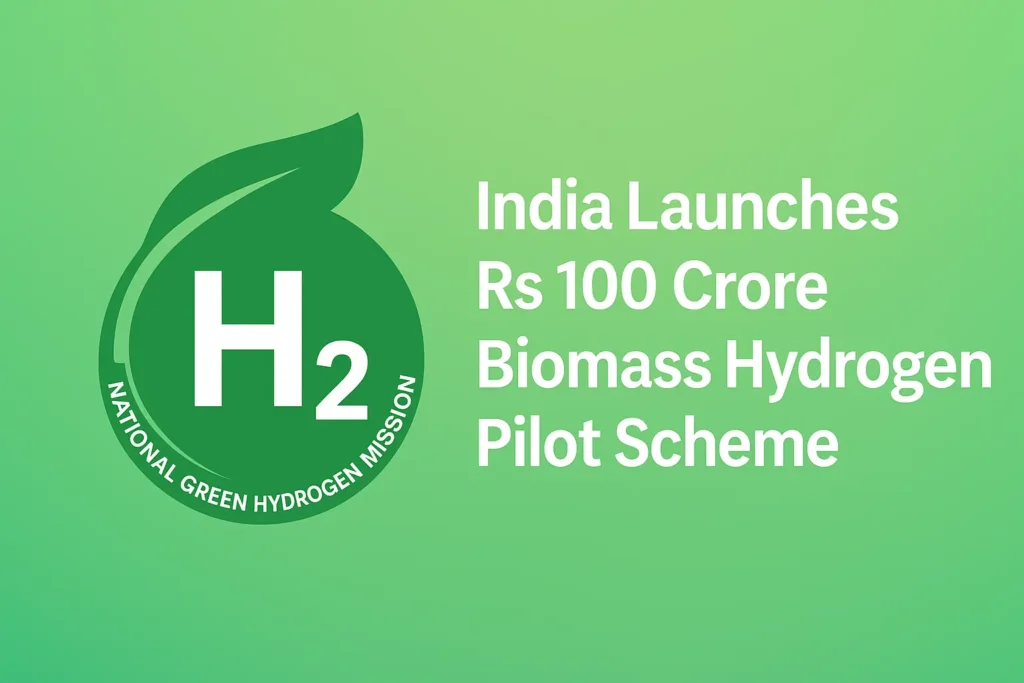
India has taken another major leap toward clean energy with the launch of a ₹100 crore ($12 million) scheme to support pilot projects that produce green hydrogen from biomass and waste materials. The announcement was made by Union Minister for New and Renewable Energy Pralhad Joshi during the inauguration of the 3rd International Conference on Green Hydrogen at Bharat Mandapam, New Delhi. Alongside this, Joshi also unveiled the official logo of the National Green Hydrogen Mission, symbolizing the country’s growing commitment to sustainable energy innovation.
The new scheme will be implemented through the Biotechnology Industry Research Assistance Council (BIRAC) and aims to fund industries, startups, and research institutions developing cutting-edge technologies for biomass-based hydrogen production. According to Joshi, this funding supplements the ₹100 crore already sanctioned for startup projects under the National Green Hydrogen Mission (NGHM), further strengthening India’s renewable energy roadmap.
Also Read – India, US Sign $1 Billion 113 GE jet engines Deal for Tejas Fighters
Mission Progress and Achievements
Launched in 2023 with a massive outlay of ₹19,744 crore, the National Green Hydrogen Mission has already achieved significant milestones. Under the Strategic Interventions for Green Hydrogen Transition (SIGHT) program, incentives have been approved for 3,000 MW of domestic electrolyser manufacturing capacity and 8.62 lakh metric tonnes per annum (MTPA) of green hydrogen production.
India has also recorded the world’s lowest green ammonia price at just ₹49.75 per kg for a capacity of 7.24 lakh MTPA, making the country a cost leader in global green energy markets.
So far, the government has invested:
- ₹132 crore in five pilot projects for green steel,
- ₹208 crore for 37 hydrogen-fuelled vehicles and nine refuelling stations, and
- ₹35 crore for the first hydrogen bunkering and refuelling facility at V.O. Chidambaranar Port in Tamil Nadu.
These initiatives collectively push India closer to its target of achieving a carbon-neutral industrial ecosystem, especially in hard-to-abate sectors like steel, shipping, and heavy transport.
Future Targets and Global Collaboration
During the event, Minister Joshi unveiled the new National Green Hydrogen Mission logo, selected from over 2,500 entries nationwide. The logo reflects the people’s participation and collective vision behind India’s clean energy transition. He reiterated that the mission’s broader goal is to decarbonize energy-intensive industries, reduce dependence on imported fossil fuels, and position India as a global hub for green hydrogen production, use, and export.
Supporting this vision, Santosh Kumar Sarangi, Secretary of the Ministry of New and Renewable Energy, stated that the mission is expected to:
- Mobilize over ₹8 lakh crore in investment,
- Create six lakh new jobs, and
- Save nearly ₹1 lakh crore annually in fossil fuel imports.
India’s renewable energy landscape continues to expand rapidly, with a non-fossil installed capacity exceeding 250 GW, which includes about 130 GW of solar and over 50 GW of wind energy. This progress aligns with the country’s ambitious target of 500 GW of renewable capacity by 2030.
Also Read – SBI to Divest 6.3% Stake in SBI Funds Management via IPO – All You Need to Know
Driving a Sustainable Future
The biomass hydrogen pilot scheme represents a crucial new frontier in India’s green hydrogen roadmap — merging clean energy innovation with circular economy principles by converting agricultural and organic waste into fuel. This not only reduces carbon emissions but also supports rural economies and waste management efforts.
By integrating biotechnology, innovation, and industry participation, India is demonstrating how developing nations can lead in cost-effective, sustainable hydrogen technologies. As global energy markets shift toward low-carbon solutions, India’s strategy — combining policy support, private investment, and research funding — positions it to become a key player in the global green hydrogen value chain.
Conclusion
India’s $12 million biomass hydrogen pilot scheme is more than just a funding initiative — it’s a signal of the nation’s determination to transform its energy landscape. Backed by the National Green Hydrogen Mission’s robust framework, India is steadily moving toward becoming a renewable energy superpower, where clean fuel, economic growth, and innovation go hand in hand.
With bold investments, strategic partnerships, and clear policy direction, India is not just following the green revolution — it’s leading it.
Thank you for reading. Don’t forget to subscribe for more coverage on women’s sport, cricket breakthroughs and Indian sporting milestones.