
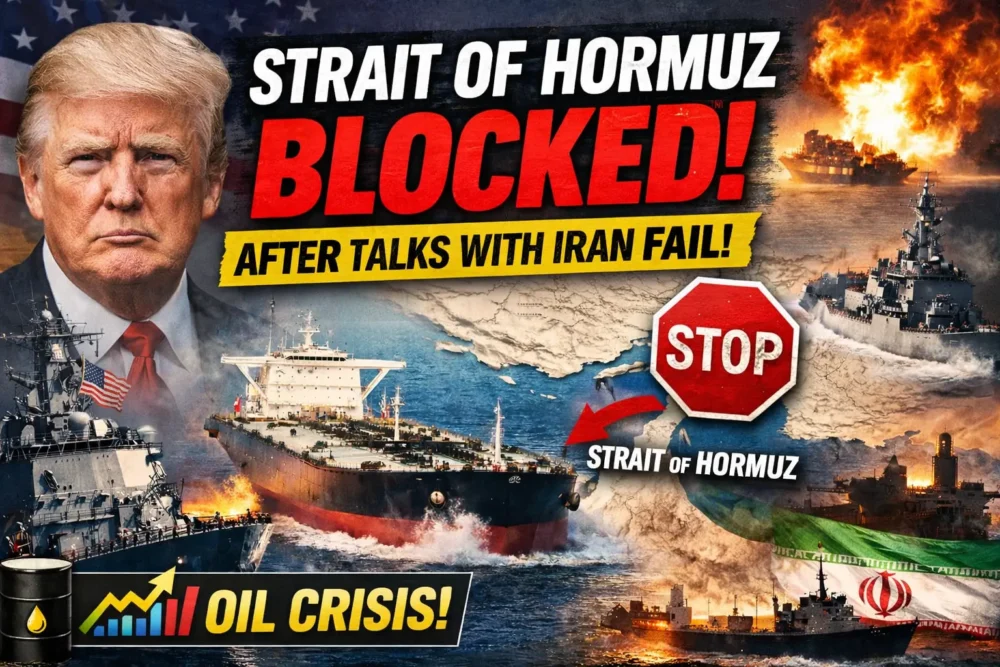
Hormuz Shockwave: US Orders Naval Blockade After Talks With Iran Collapse
In a move that has instantly heightened geopolitical tensions across the Middle East, Donald Trump has announced a naval blockade of the Strait of Hormuz—a narrow but crucial artery through which a significant portion of the world’s oil flows every day. The decision follows the abrupt collapse of high-level negotiations between the United States and Iran, held in Islamabad, which stretched over 21 hours but failed to deliver a breakthrough.
What was initially framed as a final diplomatic push to ease rising friction has instead resulted in a decisive shift toward military posture. According to official statements, the United States Navy will begin active monitoring and restriction of maritime movement through the strait. This includes scrutiny of vessels suspected of financial or logistical links to Iranian operations, particularly those tied to transit payments or trade flows involving Tehran.
Also Read: Alibaba’s Strategic Pivot: Is the Era of Free Open-Source AI Coming to an End?


The implications are immediate and far-reaching. The Strait of Hormuz is widely regarded as one of the most sensitive chokepoints in global commerce, handling nearly a fifth of the world’s oil shipments. Any disruption—even partial—can reverberate across continents, affecting everything from fuel prices in Asia to inflationary pressures in Western economies. For countries like India, heavily reliant on imported crude, the stakes are especially high.
Despite marathon negotiations in Islamabad, both sides remained entrenched in their positions. American officials reportedly pushed for stricter compliance frameworks and expanded oversight mechanisms, while Iran resisted what it described as disproportionate and unrealistic demands. President Trump, while acknowledging that “some progress” had been made, ultimately confirmed that core issues remained unresolved, leaving Washington with what it described as “no viable alternative” but to assert control over the maritime corridor.

Markets have already begun reacting to the announcement, with analysts warning of potential volatility in global oil prices. Even the perception of risk in the Strait of Hormuz tends to trigger speculative spikes, as traders anticipate supply disruptions. Shipping companies are also likely to reassess routes, insurance premiums, and operational costs, which could cascade into higher prices for goods and energy worldwide.
Iran, for its part, has yet to issue an official response following the blockade announcement. However, earlier remarks from Iranian representatives during the Islamabad talks suggest deep frustration with the US negotiating stance. There is growing concern among geopolitical observers that Tehran may respond asymmetrically—either through regional proxies or by testing the limits of the blockade itself.
The broader international community is now watching closely. Major powers with vested interests in uninterrupted energy flows, including China and European nations, are expected to weigh in diplomatically. The risk of miscalculation in such a heavily militarized and economically vital zone remains high, particularly as naval assets from multiple countries operate in close proximity.
Also Read: Motorola’s Next Flagship Leaked: Massive 6,500mAh Battery and a Stunning Wood-Grain Design Revealed


For now, the situation remains fluid but undeniably tense. The shift from negotiation table to naval enforcement underscores how fragile the balance of power in the region has become. Whether this escalation leads to a prolonged standoff, renewed diplomacy, or something far more destabilizing will depend on the next moves from both Washington and Tehran.
One thing, however, is already clear: the waters of the Strait of Hormuz are no longer just a passage for oil—they have once again become a focal point of global power, strategy, and uncertainty.
For the latest tech and news updates stay connected to Times Mitra: https://times.motormitra.in/