

HAL to Manufacture Russian SJ-100 Passenger Aircraft in India | Make in India Aviation Milestone
India’s aerospace ambitions soared higher in 2025 when Hindustan Aeronautics Limited (HAL) signed an agreement with United Aircraft Corporation (UAC) of Russia to locally manufacture the Sukhoi Superjet 100 (SJ-100) passenger aircraft.
The collaboration, announced under the Make in India and Aatmanirbhar Bharat initiatives, marks a new chapter in Indo-Russian civil aviation cooperation—one that promises technology transfer, domestic job creation, and regional connectivity growth. motor mitra
The HAL-UAC Agreement: Strengthening Aerospace Ties
HAL, India’s flagship aerospace company with proven expertise in indigenous aircraft like Tejas and Dhruv, will jointly assemble, test, and later produce the SJ-100 in India.
Key takeaways from the 2025 pact:
- Establishment of a dedicated SJ-100 production line (likely at HAL Bengaluru or Nashik).
- Technology-transfer framework to localize key components.
- Training programs for Indian engineers and technicians by Russian specialists.
What Is the Sukhoi Superjet 100 (SJ-100)?
The Sukhoi Superjet 100 is a twin-engine regional jet designed by Sukhoi Civil Aircraft Company, a subsidiary of UAC. It’s engineered for short-haul routes, offering airlines high fuel efficiency and passenger comfort. motor mitra
| Specification | Details |
|---|---|
| Aircraft Type | Twin-engine regional jet |
| Seating Capacity | 87 – 108 passengers |
| Range | Up to 3,000 km |
| Engines | PowerJet SaM146 turbofan |
| Cruise Speed | ~870 km/h |
| First Flight | May 2008 |
| Certification | EASA Certified |
Deployed across Russia, Mexico, and Asia, the SJ-100 is renowned for low operating costs, modern avionics, and eco-efficiency.

🇮🇳 Why Build SJ-100 in India?
India’s regional aviation market is expanding rapidly, driven by schemes like UDAN (Ude Desh ka Aam Nagrik) that promote affordable air connectivity.
Strategic Advantages
- Regional Connectivity Boost: Perfect for Tier-2 and Tier-3 city routes.
- Make in India Momentum: Reduces dependence on imported aircraft.
- Job Creation: Thousands of roles in manufacturing and maintenance.
- Technology Transfer: Builds domestic design and assembly capability.
- Export Potential: Positions India as an export hub for Asia & Africa.
Localization and Technology Transfer
HAL’s participation ensures maximum component localization:
- Avionics and flight-control systems
- Fuselage and wing structures
- Maintenance & repair infrastructure
- Pilot and crew training facilities
Russia will assist in early-stage assembly, certification, and supply-chain integration until Indian facilities reach full capacity. motor mitra
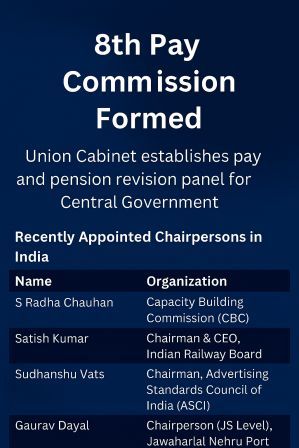
Also Read – 8th Pay Commission Formed | Revise Salaries 2025
Global Context and Market Potential
The regional jet market is growing steadily post-pandemic. Rising demand in Asia, Africa, and Latin America for efficient short-haul aircraft gives India a strong export opportunity.
Market Drivers:
- Surge in domestic air travel
- Expansion of low-cost carriers
- Infrastructure growth in developing regions
- Environmental regulations favoring fuel-efficient jets
India’s entry challenges long-time leaders Embraer and Bombardier, potentially reshaping the sub-100-seat aircraft market.
Challenges to Overcome
While promising, several hurdles remain:
- Certification & Regulatory Approvals from DGCA and EASA.
- Supply Chain Complexity in sourcing components locally.
- Competition from ATR, Embraer, and Airbus A220.
- Public Perception of Russian aircraft safety.
Nevertheless, HAL’s proven reliability and India’s growing aerospace infrastructure give the program a solid foundation. @motor mitra
Economic and Industrial Impact
- Employment Boost: Thousands of direct and indirect jobs.
- Vendor Development: Opportunities for Indian MSMEs in aerospace.
- Skill Development: Collaboration with institutes like IIA Bengaluru and NPTI for training.
- Export Revenue: SJ-100 variants may be marketed to ASEAN and African countries.
Future Outlook
The HAL-UAC SJ-100 collaboration could pave the way for:
- Joint development of next-gen regional jets
- Conversion into cargo and defense variants
- Strategic alliances with Indian airlines like Alliance Air and IndiGo
- Entry into the global aviation supply chain
With sustained R&D and policy support, India could emerge as a major hub for civil aircraft production by 2035.

Also Check:– 6 New Midsize SUVs Launching in 2025–26 – Tata to Renault
Conclusion
The HAL-UAC agreement to manufacture the SJ-100 in India is more than a commercial venture—it is a strategic milestone that aligns with India’s vision of becoming a global aerospace leader.
By blending Russian engineering and Indian manufacturing expertise, the project has the potential to transform India from a civil aviation market to a manufacturing powerhouse.
If executed successfully, it will strengthen Indo-Russian ties, support Make in India, and position the nation as a key player in the global aviation value chain.
FAQs
Q1. What is the SJ-100 aircraft?
It is a twin-engine regional jet developed by Sukhoi Civil Aircraft, designed for short domestic routes with up to 108 passengers.
Q2. Who will build the SJ-100 in India?
Hindustan Aeronautics Limited (HAL) in collaboration with Russia’s UAC.
Q3. Where will production take place?
Likely at HAL’s Bengaluru or Nashik facilities.
Q4. How does this project support Make in India?
By localizing manufacturing, transferring technology, and creating aerospace jobs in India.
Q5. What is the aircraft’s range and capacity?
Up to 3,000 km range and 87–108 passenger seating capacity.
For more such updates and latest news on cars and bikes stay connected to times.motormitra.in
Thank you ..