
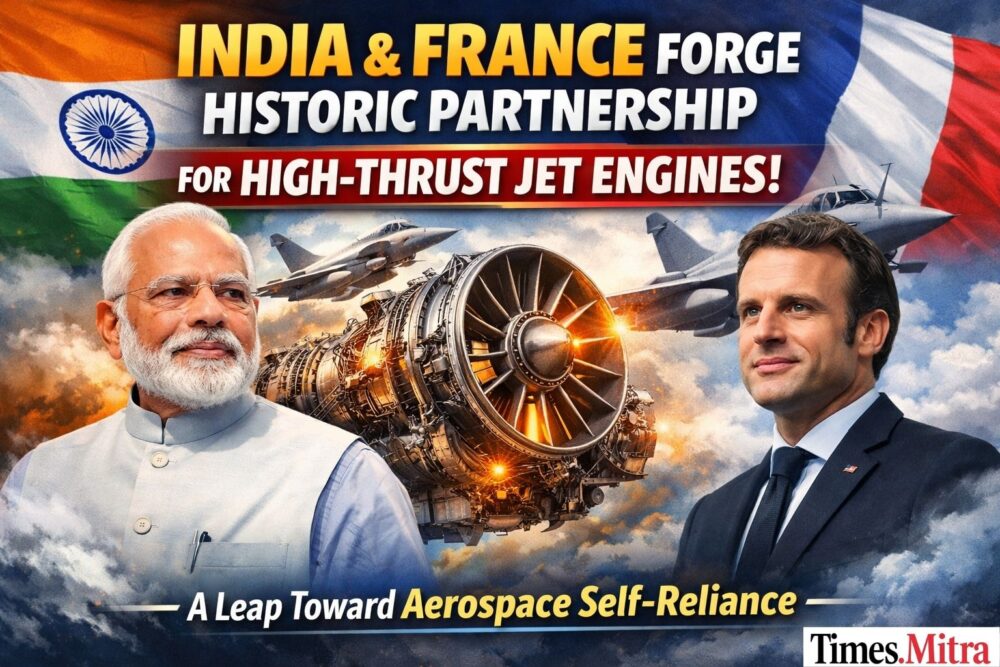
India’s defense sector is witnessing a transformative collaboration with France’s Safran Aircraft Engines and Hindustan Aeronautics Limited (HAL), aimed at developing advanced jet engines for future fighter aircraft. This deal promises 100% technology transfer, empowering India to produce high-thrust engines independently and reduce reliance on foreign suppliers.
Partnership Details
The agreement builds on a 2021 MoU signed in Bengaluru between HAL and Safran, focusing initially on assembling the M88 engine used in Rafale jets and manufacturing its components in India. It has evolved into co-development of a 110-120 kN afterburning turbofan engine, crucial for powering the Advanced Medium Combat Aircraft (AMCA), India’s fifth-generation stealth fighter. Valued at around ₹61,000 crore, the project includes full intellectual property rights for India, enabling local upgrades and production.

Also Read – A Historic Surge in Gold and Silver Prices: Reshaping Investment Dynamics in 2026
Defence Minister Rajnath Singh announced this strategic tie-up in 2025, emphasizing joint efforts led by DRDO’s Gas Turbine Research Establishment (GTRE) for technology absorption. HAL will lead integration, while Safran provides expertise in compressors, turbines, and advanced materials, marking a shift from past limited collaborations.
Technological Edge
The targeted engine offers 63-110 kN thrust, covering needs from 930-1,300 kgf turbo engines to designs for future combat aircraft. Unlike previous models, this ensures supercruise capability—sustained supersonic flight without afterburners—for stealth operations. Safran’s M88, with its proven 75 kN afterburner thrust, serves as a blueprint, incorporating single-crystal blades and advanced cooling for high performance.
This high-thrust design addresses gaps in current Indian fleets, like Tejas (GE F404) and Su-30MKI (Russian AL-31FP), vulnerable to supply disruptions. By 2029, prototypes are planned, aligning with AMCA’s first flight timeline.
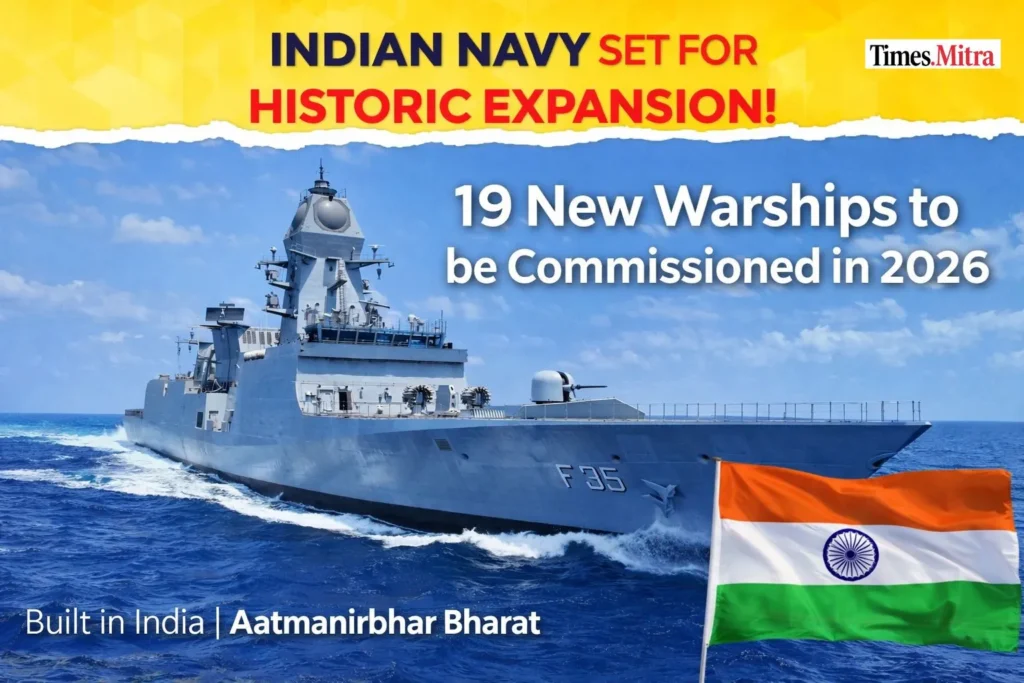
Also Read – Indian Navy Set for Historic Expansion: 19 Warships to Join the Fleet in 2026
India’s Engine Challenges
India’s quest for indigenous engines dates to the 1980s Kaveri project by GTRE, intended for Tejas but stalled due to insufficient thrust (81 kN vs. required 90 kN) and technical hurdles. Despite ₹2,839 crore investment and foreign aid attempts (including Safran in 2009-2011), Kaveri underwent flight tests on Il-76 but failed certification.
A “dry” Kaveri variant (without afterburner) targets 2026 certification for Ghatak UCAV, with high-altitude trials in Russia validating performance. Past failures highlighted ecosystem gaps in materials and testing, costing decades and forcing imports.
Strategic Benefits
This deal boosts Atmanirbhar Bharat by creating jobs, supply chains, and export potential for AMCA engines in Southeast Asia and Africa. It integrates private firms like Tata and Adani for components, fostering competition beyond HAL’s PSU monopoly. Geopolitically, it strengthens Indo-French ties, with France as a reliable partner post-Rafale and Scorpène deals.
For IAF, it ensures 1,100+ engines by 2035 for Tejas Mk2, AMCA, and UCAVs, closing squadron shortages amid China threats. Sovereign IP allows custom tweaks, unlike GE/Rolls-Royce bids lacking full ToT.
AMCA and Future Roadmap
AMCA, led by ADA, features stealth, AI, and network-centric warfare, needing 110+ kN engines for 2035 induction. Four prototypes by 2029 will test this powerplant, potentially scaling to sixth-gen tech like variable-cycle engines. Private involvement, approved in 2023, ramps Tejas Mk1A production to 16/year, easing HAL delays.
MoD’s ₹65,400 crore push targets full self-reliance by 2035, with GTRE Director S.V. Ramana Murthy overseeing. Success could position India among elite nations like US, China for stealth fighters.
Overcoming Hurdles
Challenges include HAL’s absorptive capacity, execution delays (e.g., Tejas Mk1A engine certification), and sensitive ToT safeguards. India must invest in R&D (₹20,000 crore in 2025 budget), skilled workforce, and infrastructure.
Russia trials and static tests for dry Kaveri show progress, but discipline is key to avoid Kaveri repeats. Safran’s commitment to M88 lines and IP sharing mitigates risks.
Global Context
France chose India for its market and “Make in India” synergy, over rivals like US firms hesitant on core tech. China’s J-20/J-35 advances demand this urgency; India’s move diversifies from Russia amid Ukraine war.
By 2026, dry Kaveri certification could unlock Ghatak funding, while Safran deal accelerates wet variants. This convergence—public-private, Indo-French—heralds India’s aerospace ascent.
For the latest tech and news updates stay connected to Times Mitra: https://times.motormitra.in/