
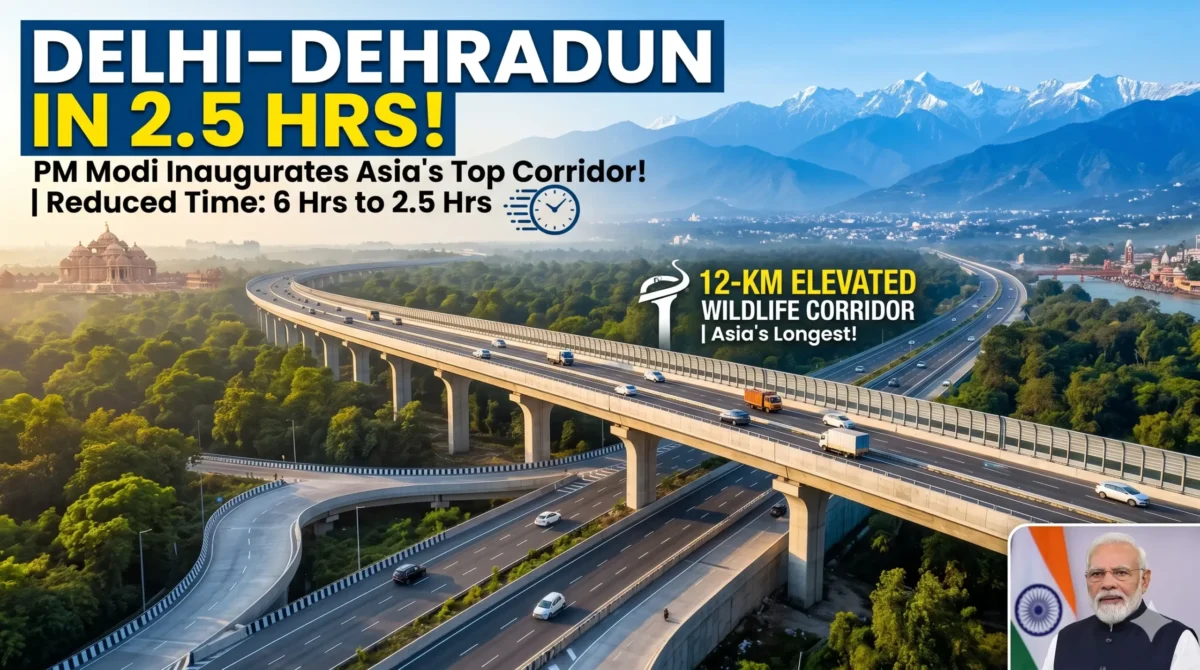
PM Modi to Open Asia’s Most Advanced Corridor
New Delhi, April 14, 2026: In a massive boost to North India’s infrastructure, Prime Minister Narendra Modi is set to inaugurate the Delhi–Dehradun Expressway today. This ₹12,000 crore “Economic Corridor” is not just a road; it’s a game-changer that promises to slash travel time between the national capital and the capital of Uttarakhand by more than half.
For decades, the journey from Delhi to Dehradun was a grueling 6-hour test of patience through congested local highways. Starting today, that journey becomes a smooth 2.5-hour breeze.
The primary highlight of this 213-km-long expressway is the drastic reduction in travel times. Whether you are a pilgrim, a weekend tourist, or a business traveler, the landscape of regional travel has officially shifted.
- Delhi to Dehradun: Reduced from 6 hours to 2.5 hours.
- Delhi to Haridwar: Reduced from 5 hours to 2 hours (via a dedicated spur).
- Delhi to Mussoorie: Reduced from 7 hours to approximately 4 hours.
Starting from the Akshardham Temple in Delhi, the expressway serves as a high-speed artery connecting the plains of Delhi and Uttar Pradesh to the foothills of the Himalayas.
The Delhi–Dehradun Expressway is divided into four distinct phases, ensuring it serves both major urban centers and rural pockets of Western Uttar Pradesh.
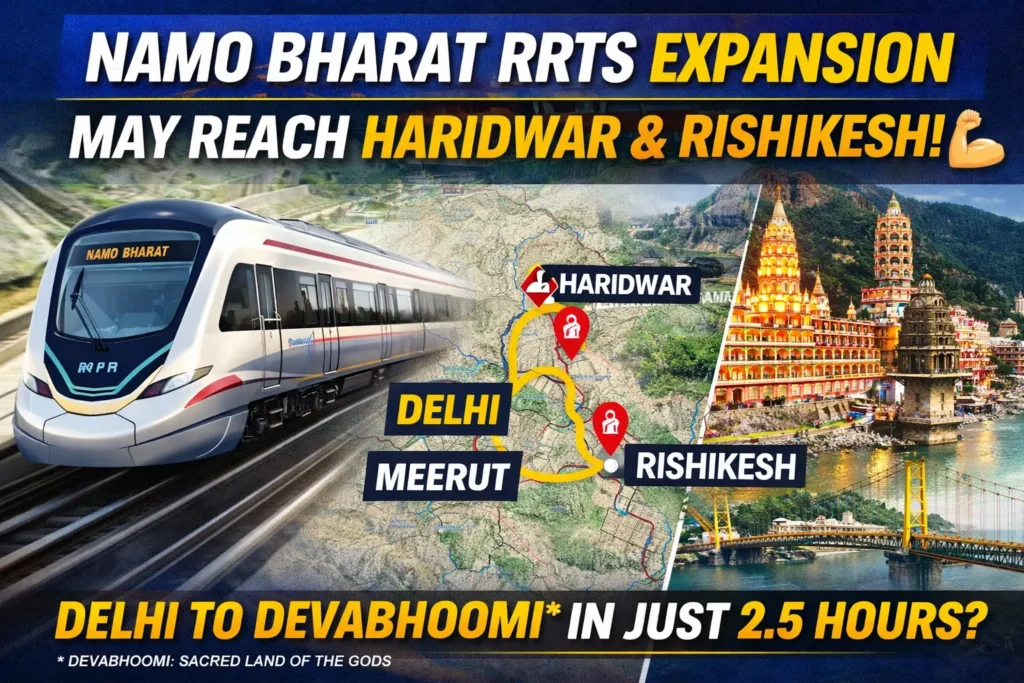
| Segment | Major Locations Covered |
| Phase 1 | Akshardham (Delhi) to Baghpat (EPE Junction) |
| Phase 2 | Baghpat to Saharanpur Bypass |
| Phase 3 | Saharanpur Bypass to Ganeshpur (Uttarakhand border) |
| Phase 4 | Ganeshpur to Dehradun (includes the wildlife corridor) |
The corridor passes through Baghpat, Baraut, Shamli, Muzaffarnagar, and Saharanpur, effectively unlocking economic potential for these industrial and agricultural hubs.
Asia’s Longest Wildlife Corridor: A Green Masterpiece
What sets this expressway apart from others in India is its commitment to ecological balance. The final 20-km stretch passes through the eco-sensitive zones of the Rajaji National Park and the Shiwalik Hills.
To protect wildlife movement, engineers have constructed a 12-km-long elevated wildlife corridor—the largest of its kind in Asia.
- Unobstructed Animal Movement: The elevated design allows tigers, elephants, and leopards to move freely underneath the highway.
- Advanced Noise Barriers: High-tech sound barriers have been installed to ensure that the noise of high-speed traffic does not disturb the natural habitat.
- The Daat Kali Tunnel: A state-of-the-art 370-meter tunnel near the Daat Kali temple further ensures that the hill’s natural topography remains intact.
Speed Limits, Tolls, and Safety Features
Built for efficiency, the expressway is an access-controlled 6-lane highway (expandable to 8 lanes).
https://www.instagram.com/reel/DXGd2pEjyzi/?igsh=MWtoeWJ1bGZ4ZW94ag==
- Speed Limit: Cars can cruise at 100 kmph, while heavy vehicles like trucks are capped at 80 kmph.
- Smart Toll System: The highway utilizes FASTag and GPS-based tolling to ensure you don’t have to stop at booths. Recent reports suggest a one-way trip for cars will cost approximately ₹60–₹100 for pass users.
- Advanced Traffic Management (ATMS): The entire stretch is monitored by AI-powered cameras to detect accidents, overspeeding, or breakdowns in real-time.
- Wayside Amenities: Every 25–30 km, travelers will find world-class amenities, including food courts, EV charging stations, and trauma centers.
Road vs. Rail: Why This Changes Everything
Until now, the Vande Bharat Express (Anand Vihar to Dehradun) was the fastest way to travel, taking roughly 4 hours and 45 minutes. With the new expressway, traveling by road is now 2 hours faster than the fastest train in India.

For families and groups, the road trip is now more cost-effective and flexible. A group of four in a car can reach Dehradun in less time and at a lower cost per head compared to premium train tickets or flights (which require long check-in times).
The “Economic Corridor” tag isn’t just for show. This expressway is expected to:
- Boost Tourism: Easier access to Mussoorie, Rishikesh, and the Char Dham circuit (Yamunotri, Gangotri, Kedarnath, and Badrinath).
- Real Estate Surge: Towns like Baghpat and Saharanpur are expected to see a massive jump in property value.
- Logistics Efficiency: Faster movement of goods between the industrial hubs of Uttarakhand and the markets of Delhi-NCR.
If you are coming from Delhi, the entry point is near the Akshardham Temple (Phase 1). Travelers from Noida and Ghaziabad can join via the Eastern Peripheral Expressway (EPE) interchange at Baghpat.
The Delhi–Dehradun Expressway is a testament to India’s “Gati Shakti” vision. By merging high-speed engineering with environmental conservation, it sets a new benchmark for future infrastructure. If you’ve been planning a trip to the hills, there has never been a better time to hit the road.
Plan your trip now, but remember to stick to the 100 kmph speed limit!
For the latest tech and news updates stay connected to Times Mitra: https://times.motormitra.in/